Gertie, a Blind, Jazz-Loving, 15-Year-Old Hen
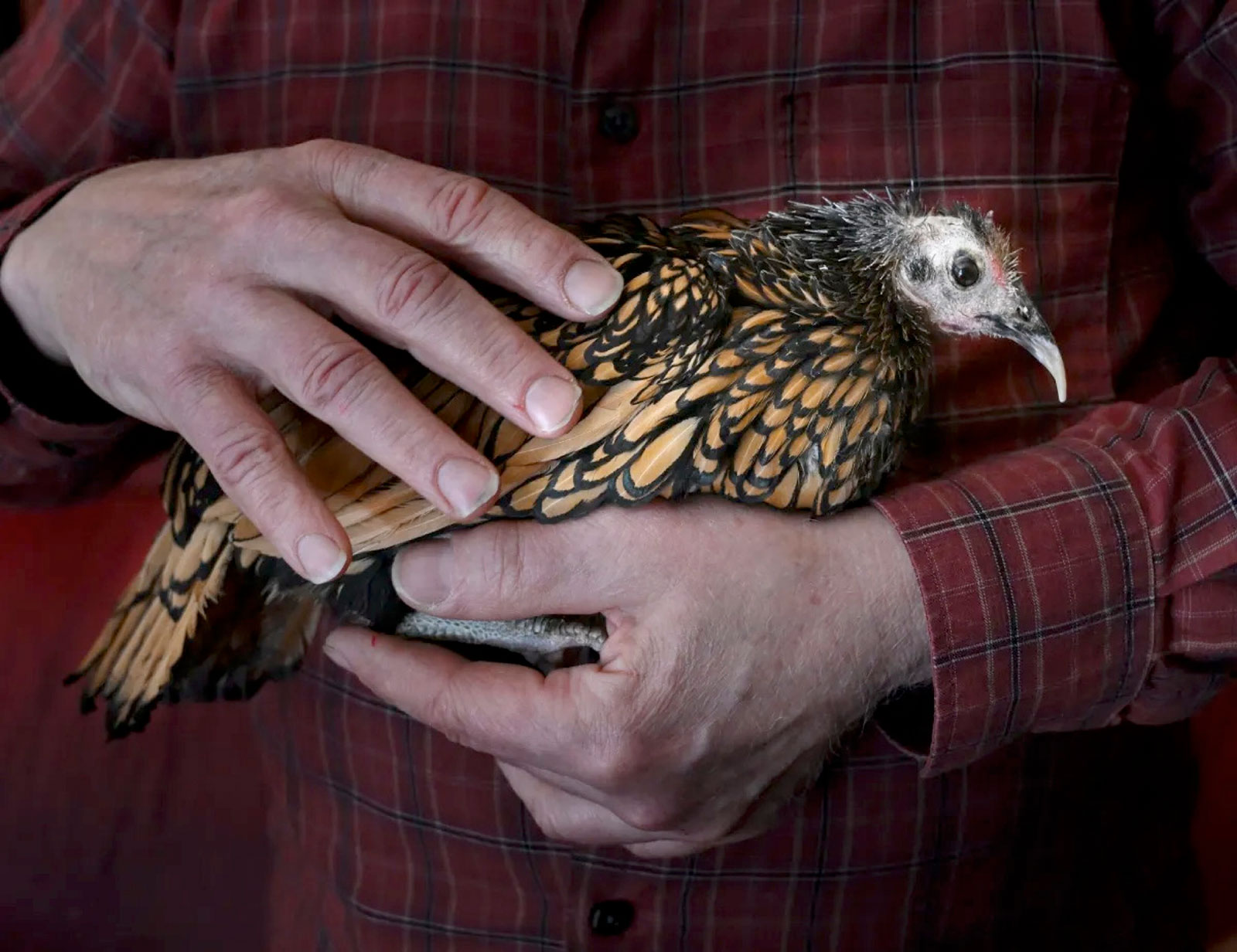
Frank Turek of Portland holds Gertie, the world's oldest chicken according to Guinness World Records.
The story of Gertie, the 15-year-old Golden Sebright hen (“The world’s oldest chicken lives in Portland. Her name is Gertie,” Portland Press Herald , April 14, 2026), offers a rare and beautiful glimpse into what a chicken can be when she is allowed to simply be. While the Guinness recognition focuses on her age, there is something more meaningful here: a blind hen who has lived a long life as an individual—forming habits, preferences, and relationships along the way, including her fondness for jazz.
Chickens are so often known only as “chicken,” as if they were interchangeable objects rather than living beings with distinct personalities. Yet anyone who has spent time with them quickly learns otherwise. One commenter wrote: “When one gets to know chickens, it becomes hard to eat them. Neither of us does now.” That shift in perception is not trivial—it is the beginning of moral awareness.
At the same time, Gertie’s story sits alongside a far less visible reality. Every hen like her is born into an industry that treats chickens as inventory. For every female chick raised, her brother is typically killed shortly after hatching because he cannot lay eggs. These are standard practices in hatcheries, where life is sorted, discarded, or shipped like merchandise.
Even in “backyard” settings, chickens are too often valued primarily for what they produce rather than for who they are. A hen may be cherished, yet still bound to a system that regards her body as a resource.
We encourage readers moved by Gertie’s life to look beyond the hatchery system altogether. Do not purchase chickens: there are already countless birds in need of homes and protection. Sanctuaries and rescues exist because these animals are not rare—they are simply rarely seen as individuals.
If Gertie’s story means anything, it is not that she is unusual but that she is visible. And millions like her are not.
– Liqin Cao & Franklin Wade, United Poultry Concerns